
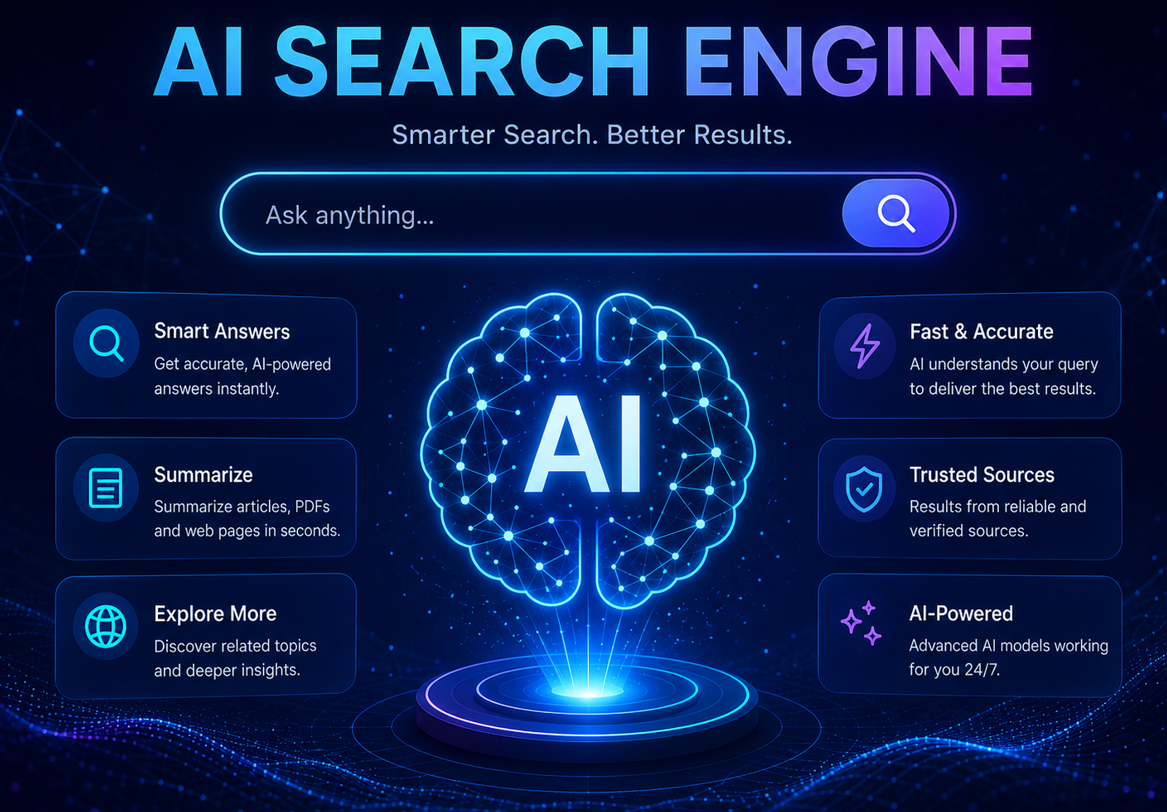
The End of Traditional Search: How AI Search Engines Rule the Internet
For over two decades, the way we look for information online has remained largely unchanged. We type a few keywords into a search bar, hit enter, and scroll through a seemingly endless list of blue links, hoping to find the exact answer we need.
But if you have been paying attention to the tech world lately, you have likely noticed a massive shift. The era of scrolling through links is slowly coming to an end, making way for a much smarter, faster, and more conversational alternative: the AI Search Engine.
Whether it is the recent announcement of OpenAI’s SearchGPT, the rapid rise of Perplexity AI, or Google’s integration of AI Overviews, artificial intelligence is no longer just a tool for generating text or images. It is completely redefining how we discover information.
Why users are making the switch, and how this technological leap will impact everything from everyday internet browsing to global digital marketing strategies.
What Exactly is an AI Search Engine?
Standard search engines are essentially massive indexes. When you search for “how to fix a leaky faucet,” the engine scans its index for web pages containing those keywords and ranks them based on authority, relevance, and backlinks. You are then left to click through multiple websites, dodge intrusive advertisements, and read through long articles just to find a simple five-step fix.
An AI search engine flips this model on its head. Instead of giving you a list of places to find your answer, it gives you the actual answer.
Powered by Large Language Models (LLMs) and real-time web browsing capabilities, an AI search engine reads multiple top-ranking articles in milliseconds, synthesizes the information, and generates a conversational, easy-to-understand response. More importantly, these platforms provide clickable citations, so you can verify the information or dive deeper into the source material. It is like having an incredibly well-read research assistant who can instantly summarize the entire internet for you.
The Top Trending AI Search Engines Leading the Charge

If you want to experience the future of search today, there are a few major players you need to know about.
1. Perplexity AI: The Conversational Pioneer
Perplexity AI has quickly become the darling of the tech community. Dubbing itself an “answer engine” rather than a search engine, Perplexity provides direct, highly accurate answers to user queries while prominently displaying footnotes linked to its sources.
2. SearchGPT by OpenAI: The Disruptor
OpenAI, the creator of ChatGPT, recently made waves with the announcement of SearchGPT. Designed to be a temporary prototype that will eventually be integrated directly into ChatGPT, SearchGPT aims to combine the conversational capabilities of their world-class models with real-time web information. By partnering directly with publishers, SearchGPT is focusing on providing fast, timely answers with clear, in-line attribution to original creators. This is widely considered the most direct challenge to Google’s long-standing monopoly.
3. Google AI Overviews (Gemini): The Tech Giant’s Response
Google is not sitting idly by while startups try to take its crown. The search giant has rolled out “AI Overviews” (formerly known as Search Generative Experience or SGE). When you search on Google AI now, you will often see an AI-generated summary at the very top of the page.
4. Microsoft Copilot: The Integrated Assistant
Formerly Bing Chat, Microsoft Copilot integrates OpenAI’s GPT-4 technology directly into the Bing search engine and the Edge browser. Copilot not only searches the web but can also generate images, format tables, and draft emails right from the search interface, making it a powerful productivity tool.
Why Are Users Switching to New AI Search?

You might be wondering why people are abandoning tools they have used for decades. The answer comes down to user experience and efficiency.
1. Zero-Click Answers: Modern internet users value time above all else. AI search engines provide “zero-click” answers, meaning the user gets the exact information they need right on the search results page. There is no need to open five different tabs to cross-reference information.
2. Conversational Context: Traditional search forces you to speak in “keywordese”—typing disjointed phrases like best Italian restaurant New York cheap. With AI search engines, you can use natural language: “I’m looking for an affordable, highly-rated Italian restaurant in New York that has vegetarian options and is open past 10 PM.” The AI understands the nuance and delivers a tailored list.
3. Clutter-Free Experience: Currently, traditional search results are heavily populated with sponsored links, SEO-optimized fluff, and aggressive pop-up ads on the target websites. AI search provides a clean, text-based answer that feels refreshing and highly focused.
The Impact on Content Creators and SEO

If AI search engines are giving users the answers directly, will anyone ever click on a website again? This is a critical conversation we frequently explore at Imagitrue, as staying ahead of digital trends is vital for online success.
In the age of AI search, ranking is no longer just about keyword stuffing or building massive backlink profiles. AI models look for deep, authoritative, and highly original content to use as their source material. To succeed in this new era, content creators must focus on:
- Original Research and Unique Data: AI can summarize existing knowledge easily, but it cannot create new data. Websites that publish original surveys, unique case studies, and first-hand experiences will become the primary sources cited by AI engines.
- Direct, Clear Formatting: AI models prefer content that is easy to parse. Using clear headings, bullet points, and concise summaries will make your website more “readable” for AI bots.
- Brand Authority: AI search engines prioritize trustworthy sources. Building a strong brand presence and establishing thought leadership in your specific niche will ensure these platforms recommend your business over competitors.
The Challenges Ahead: Hallucinations and Copyrights
It is important to note that the AI search revolution is not without its hurdles. The most prominent issue is “hallucinations”- instances where the AI confidently generates false information.
Additionally, the relationship between AI companies and original content publishers is incredibly tense. Publishers invest heavy resources into creating journalism, recipes, and tutorials.
What Does the Future Hold?

The transition from traditional search to conversational AI search is not going to happen overnight, but the momentum is undeniable. We are moving toward a future where the internet acts less like a massive library where you have to find your own book, and more like an intelligent consultant that hands you the exact paragraph you need.
For everyday users, this means a faster, smarter, and more intuitive internet. For businesses and creators, it means adapting to a new set of rules where quality, originality, and authority matter more than ever before.
To keep up with the latest trends in technology, digital strategy, and AI innovations, be sure to explore more insights and resources right here on Imagitrue. The future of discovery is already here—it is time to start asking the right questions.